
Ada County Five-Day Arrest Log
The official multi-day blotter comes from the ACSO Arrests application. Set the View control to Last 5 Days. That label reads "Weekly Arrest Log," but the tool is not a Monday-through-Sunday archive. Ada County gives you a five-day rolling window instead. The count starts from the moment you open it. That limit matters when you trace a weekend arrest or an event from earlier in the workweek.
The five-day view reaches much farther back than the daily report. It also surfaces a wider mix of arresting agencies, charge types, and older booking events. It still cannot confirm current custody. A person may have been released or transferred while the arrest entry stays on screen. For current housing, check the separate inmate roster.
Read Ada County Arrest Entries
Start from the arrest date, not the screen order. The Ada County interface can sort by name, age, arrest date, or status. Sorting runs in either direction. A text search accepts a name, city, age, or arrest date too. Those controls narrow a busy stretch of bookings, but the report is no permanent archive.
- Open the official ACSO report and choose Last 5 Days from the View selector.
- Sort by arrest date. Confirm whether the newest or oldest entry appears first before comparing events.
- Search by the most reliable known detail, then match name, age, city, time, and agency to avoid a similar-name error.
- Expand the entry and read every charge row, including the statute, severity, and charge type.
- Use the current roster for housing and the court portal for the later legal disposition.
For tight 4-hour and 24-hour views, the Daily Arrest Report works better. The weekly log answers a different question: where does a recent Ada County arrest sit in the broader multi-day sequence once day one has passed? The official five-day arrest-report source displays the full rolling blotter.
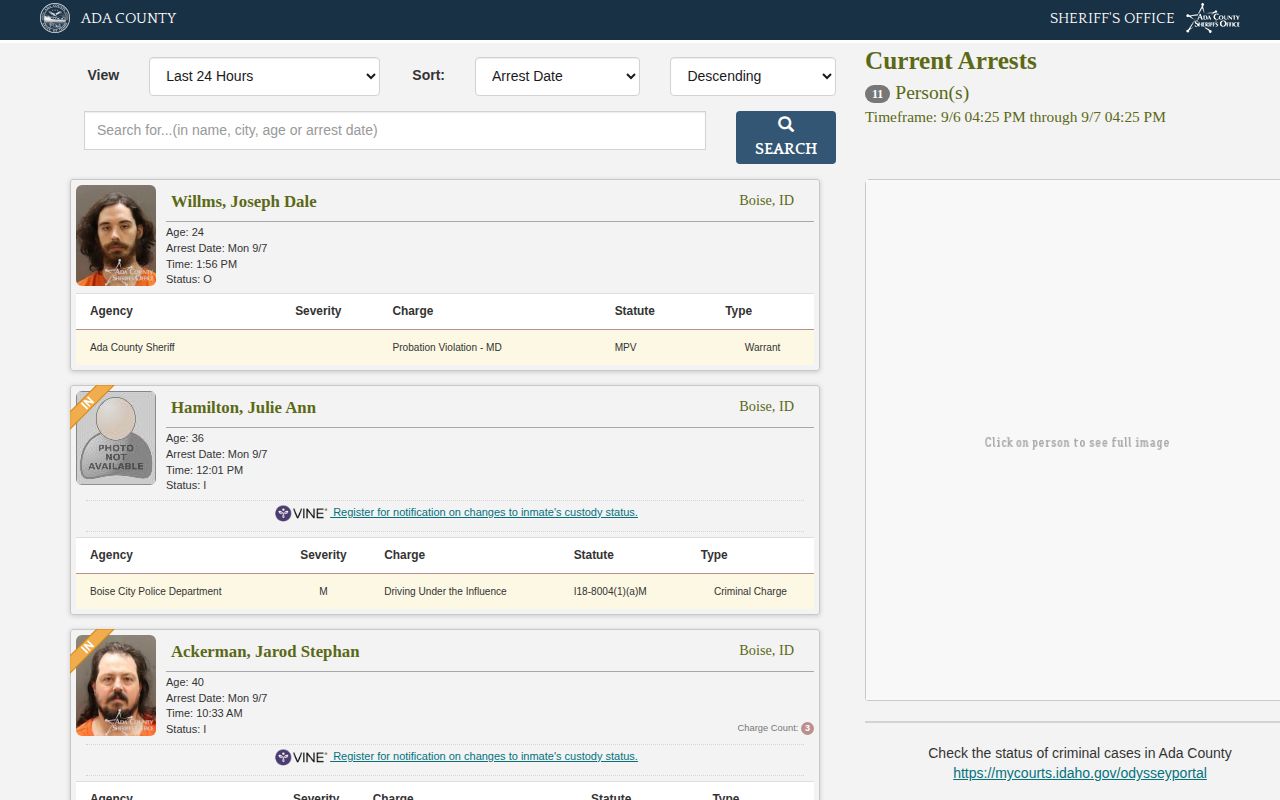
Set the selector at search time. The same Ada County endpoint also supplies the shorter report windows.
Ada County Arrest Log Fields
Each Ada County entry opens with identity and event details. Charge-level information sits beneath it. An inline booking photo may appear, along with a VINE handoff. No court date or formal case number is guaranteed. No final result appears here.
| Displayed item | How to read it |
|---|---|
| Name, age, city, and state | Matching details for the person in the booking event. |
| Arrest date and time | The time attached to the arrest record, used to place it within the five-day window. |
| Agency | The listed arresting or associated law-enforcement agency. |
| Charge description and statute | Charges and cited law recorded at booking, not the court’s final determination. |
| Severity and type | Classification plus a type such as criminal charge, warrant, out-of-county warrant, or fugitive. |
| Photo and VINE option | May be available on some records; neither establishes conviction or present custody. |
A short status marker may appear too. ACSO gives no public key for the one-letter codes, so treat them loosely. Check the roster or call the jail for current custody status. A charge may change after booking. In that case the Idaho court docket is the stronger source.
Ada Weekend Arrest Log Timing
Nothing from ACSO says the electronic arrest report pauses on weekends or holidays. Bookings continue. An image or roster snapshot may lag behind. The five-day view earns its keep across a weekend. It preserves more event time than the same-day selection. Calling it a Monday catch-up publication has no official basis.
Missing an arrest you expected? Compare the known event time against the rolling boundary first. Then inspect the roster's "as of" stamp, which carries an explicit 24-hour update warning. A fresh booking may still be processing. A released person can drop off the roster while staying in the five-day arrest log. Restricted, sealed, and juvenile material can be absent by design.
Note: If a later records request may depend on the sequence, save the check date, time, selected view, and the displayed arrest time.
Ada Arrest Records Past Five Days
The public interface stops at five days. That is a display limit, not a destruction schedule. ACSO publishes nothing about how long a county booking photo or report is kept. Once an arrest rolls off, request the maintained record from the agency. Do not assume it vanished. Use the ACSO Public Records Request for an older Ada County Jail booking report or photo. Include the full name and date of birth. Add the approximate arrest date, the agency, and any report or case number. Name the exact item wanted. ACSO cites a 3-to-10-business-day response period and possible fees. Exemptions cover open investigations, victim or witness details, fair-trial interests, and protected records.
Court files follow their own life cycle. Search the Idaho Odyssey Portal for the Ada County criminal case, or ask the clerk for a certified or older court record. A docket can remain open long after the booking card disappears. A third-party copy can also linger after the official interface moves on.
State archives do not fill this county gap. Idaho Department of Correction retention rules govern state records, not Ada County Jail booking photos. The Idaho State Archives Records Center can identify state material transferred into archival custody, but its holdings never prove a modern Ada booking image moved there. Start with the office that created the record.
- Rolling window
- A view measured backward from the time of access.
- Archive
- Records kept beyond the live public display, subject to custody and retention rules.
- Disposition
- The court’s resolution of the charge.
- Expungement
- A legal form of record relief available only when Idaho requirements are met.
Ada Arrest News Is Selective
Local news is not a second complete blotter. The Idaho Statesman crime section, IdahoNews/CBS2 local news, KTVB, and Idaho Press report cases chosen for editorial reasons. Some articles use a photo credited to ACSO or Ada County Jail. They do not promise to publish every booking or update each story when a charge changes.
The IdahoNews local section is represented by this captured news page.
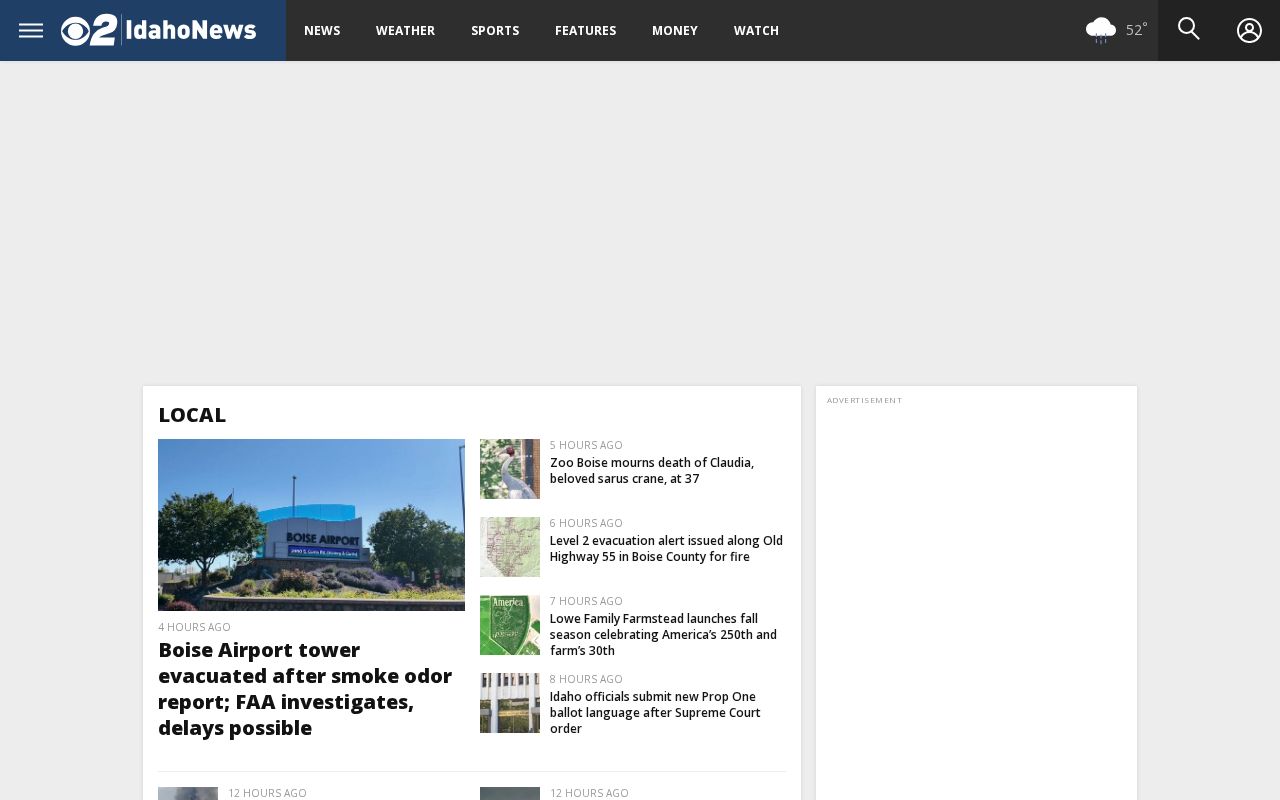
Case context is where news helps most. ACSO and the court file hold the actual arrest record. The Idaho Press local section offers another secondary lead. Treat it as a tip sheet, not a standing Ada County booking list.
Unofficial Ada Booking Copies
Unofficial sites come last, after the official report and court record. RecentlyBooked keeps an Ada page covering a wider recent span. Arrests.org labels its section Ada County Bookings. Both copy photos and charge fields from public booking records, so entries can lag behind the jail roster. Details may be missing, delayed, or flat wrong, which is why the sheriff's record comes first. The RecentlyBooked Ada section shows how these third-party pages present local arrest data.
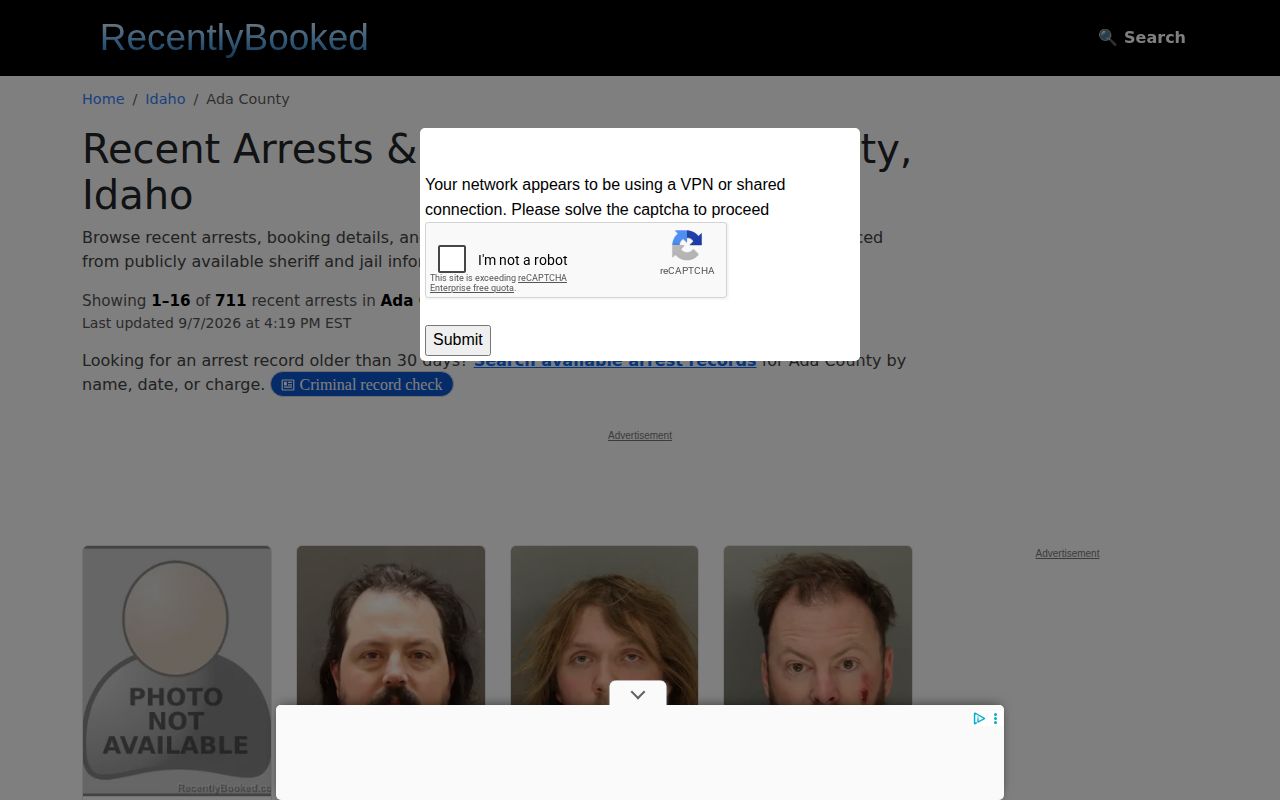
These copies can outlast ACSO's five-day display. Persistence is not an archive, though. A page that never comes down is still not an official record. Boise Busted is another Ada-focused site. Most national mugshot sites list no Ada local section at all. Match every copied claim against ACSO and the Idaho court docket.
Eagle Arrest Counts Differ
Eagle handles arrest data differently. The city buys police services from ACSO. Its monthly activity reports tally offenses, calls, response times, and arrest counts as aggregate figures. No arrested person is named. No booking photos appear either. For a named Eagle arrest that reached Ada County Jail, the ACSO arrest report is the place to look. Eagle's monthly totals cannot be spliced into a live five-day screen. The periods and counting methods simply do not match. Aggregate trends and person-level bookings answer different questions.
The same split applies to Boise and Meridian. Their police departments hold incident reports. ACSO holds the county booking record for anyone processed at Ada County Jail. A multi-day report entry also names the arresting agency. That detail helps route a follow-up request to the right office.
Public Record Search
Sponsored Results